Creating a rich and flavorful beef bone broth is a rewarding process that yields a versatile base for soups, stews, and sauces. This recipe involves slow-simmering beef bones with vegetables and apple cider vinegar to extract maximum nutrients and flavor.
While most of the ingredients for this beef bone broth are common, you might need to visit a butcher for high-quality beef bones, preferably with marrow. Apple cider vinegar is also essential as it helps to draw out minerals from the bones, enhancing the broth's nutritional value.
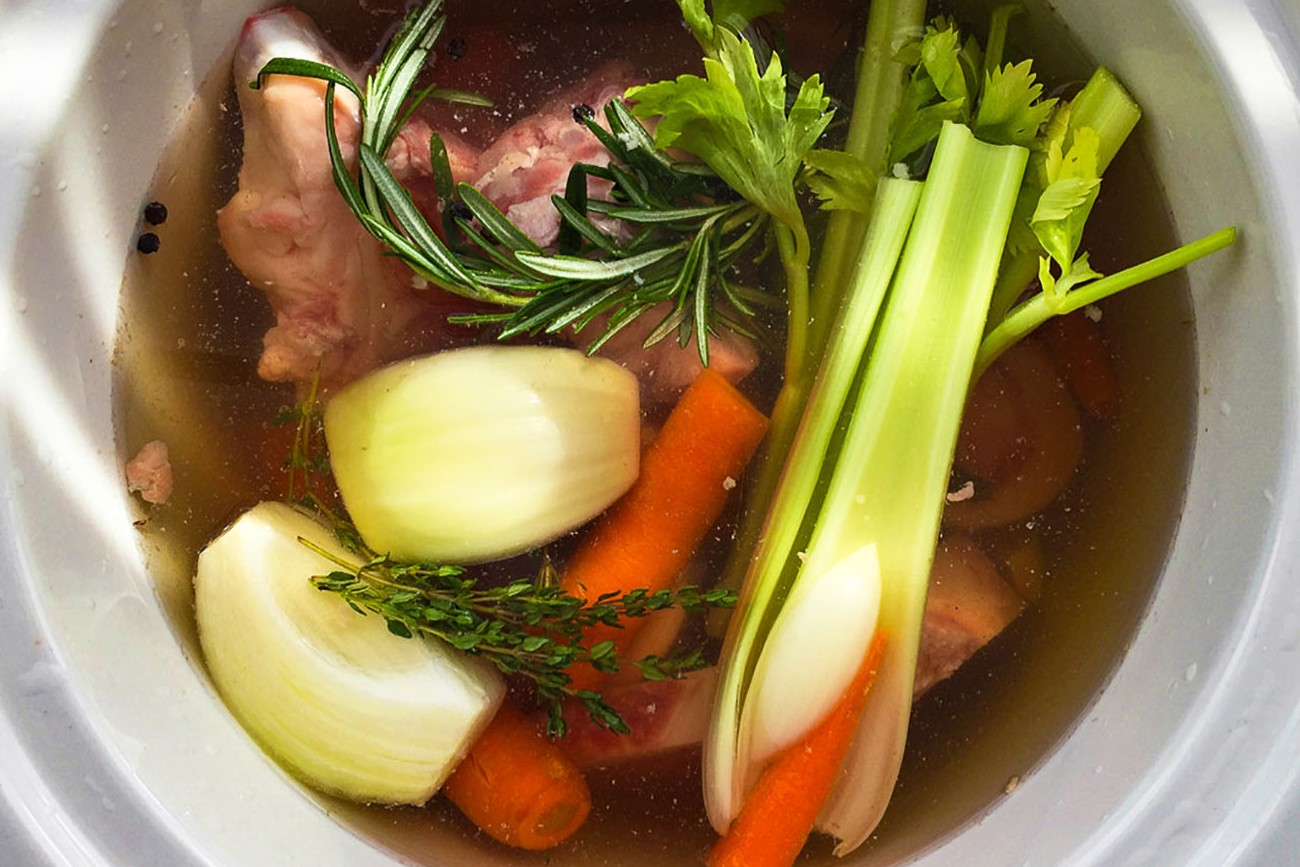
Ingredients For Beef Bone Broth Recipe
Beef bones: The foundation of the broth, providing rich flavor and nutrients.
Onion: Adds depth and sweetness to the broth.
Garlic: Enhances the overall flavor with a subtle pungency.
Celery: Contributes a mild, aromatic flavor.
Carrots: Adds sweetness and color to the broth.
Apple cider vinegar: Helps extract minerals from the bones.
Salt: Enhances the overall flavor of the broth.
Water: The base liquid that extracts flavors and nutrients from the ingredients.
Technique Tip for Making Bone Broth
Roasting the beef bones at a high temperature before simmering them in water helps to develop a deeper, richer flavor in your bone broth. This caramelization process, known as the Maillard reaction, enhances the overall taste and color of the broth. Additionally, adding apple cider vinegar to the pot helps to draw out minerals from the bones, making your broth more nutritious. Make sure to skim off any foam or impurities that rise to the top during simmering to keep the broth clear and clean.
Suggested Side Dishes
Alternative Ingredients
beef bones - Substitute with chicken bones: Chicken bones can provide a similar depth of flavor and richness, especially if they include some marrow.
beef bones - Substitute with pork bones: Pork bones, particularly those with marrow, can also add a rich and hearty flavor to the broth.
onion - Substitute with leek: Leeks offer a milder, slightly sweeter flavor that can complement the broth well.
onion - Substitute with shallots: Shallots provide a more delicate and slightly sweeter taste compared to onions.
garlic - Substitute with garlic powder: Garlic powder can be used if fresh garlic is not available, though it may lack the same depth of flavor.
garlic - Substitute with onion powder: While not a direct substitute, onion powder can add a similar aromatic quality to the broth.
celery - Substitute with fennel: Fennel has a slightly sweet and anise-like flavor that can add a unique twist to the broth.
celery - Substitute with celeriac: Celeriac, or celery root, provides a similar flavor profile and can be used in place of celery stalks.
carrots - Substitute with parsnips: Parsnips have a sweet, earthy flavor that can complement the broth similarly to carrots.
carrots - Substitute with sweet potatoes: Sweet potatoes add a different kind of sweetness and a slightly thicker texture to the broth.
apple cider vinegar - Substitute with white vinegar: White vinegar can be used to help extract minerals from the bones, though it lacks the slight sweetness of apple cider vinegar.
apple cider vinegar - Substitute with lemon juice: Lemon juice can also help extract minerals and adds a fresh, citrusy note to the broth.
salt - Substitute with soy sauce: Soy sauce can add a salty, umami flavor to the broth, though it will also darken the color.
salt - Substitute with miso paste: Miso paste adds a salty, umami-rich flavor and can enhance the overall depth of the broth.
water - Substitute with vegetable broth: Vegetable broth can add additional layers of flavor to the beef bone broth.
water - Substitute with chicken broth: Chicken broth can provide a richer base and enhance the overall flavor of the beef bone broth.
Alternative Recipes Similar to Bone Broth
How to Store and Freeze Your Broth
- Allow the beef bone broth to cool completely before storing. This helps prevent condensation and bacterial growth.
- Transfer the cooled broth into airtight containers. Mason jars, BPA-free plastic containers, or silicone freezer bags work well.
- Label each container with the date and contents. This ensures you know when it was made and helps with rotation.
- For refrigeration, store the broth in the coldest part of your fridge. It will keep for up to 5 days.
- For freezing, divide the broth into smaller portions. This makes it easier to thaw only what you need. Ice cube trays or muffin tins are great for this.
- Once frozen, transfer the broth cubes to a larger freezer-safe bag or container. This saves space and keeps your freezer organized.
- When ready to use, thaw the broth in the refrigerator overnight or use the defrost setting on your microwave.
- Reheat the broth on the stove over medium heat until it reaches a simmer. Avoid boiling to preserve the delicate flavors.
- If you notice any off smells or changes in texture, discard the broth. Safety first!
How to Reheat Leftovers
Gently reheat the beef bone broth on the stovetop. Pour the desired amount into a saucepan and warm over medium heat, stirring occasionally until it reaches your preferred temperature. This method preserves the rich flavors and nutrients.
Use a microwave for a quick reheat. Place the broth in a microwave-safe bowl, cover with a microwave-safe lid or plate, and heat on high for 1-2 minutes. Stir halfway through to ensure even heating. Be cautious not to overheat, as it can alter the taste.
For a slow and steady reheat, use a slow cooker. Transfer the broth to the slow cooker and set it on low. This method is perfect if you want to keep the broth warm for an extended period, such as during a gathering or meal prep.
Reheat the broth in an oven-safe dish. Preheat your oven to 300°F (150°C). Pour the broth into an oven-safe dish, cover with foil, and heat for about 20-30 minutes. This method is ideal if you’re reheating a large quantity.
Use a double boiler for gentle reheating. Place the broth in the top part of a double boiler and heat over simmering water. This method ensures the broth heats evenly without the risk of burning.
Add the broth to a soup or stew. If you’re making a new dish, simply incorporate the leftover beef bone broth directly into the recipe. This not only reheats the broth but also enhances the flavor of your new creation.
Essential Tools for Making Bone Broth
Oven: Used to roast the beef bones at 400°F (200°C) for 30 minutes to enhance their flavor.
Baking sheet: Holds the beef bones while they roast in the oven.
Large pot: Used to simmer the roasted bones with other ingredients for at least 8 hours.
Knife: Essential for quartering the onion and chopping the celery and carrots.
Cutting board: Provides a safe surface for chopping the vegetables.
Fine-mesh strainer: Strains the broth to remove solids, ensuring a clear liquid.
Ladle: Helps to skim off any foam or impurities that rise to the top during simmering.
Refrigerator: Used to cool the broth, allowing the fat to solidify for easy removal.
Spoon: Useful for smashing the garlic cloves.
Measuring spoons: Ensures accurate measurement of the apple cider vinegar and salt.
Container: Stores the strained broth in the refrigerator.
Time-Saving Tips for Making Bone Broth
Roast in batches: If you have a small oven, roast the beef bones in batches to save time.
Use a slow cooker: A slow cooker can simmer the broth overnight, freeing up your stove.
Pre-chop vegetables: Chop the onion, garlic, celery, and carrots in advance to streamline the process.
Freeze portions: Make a large batch and freeze broth in portions for quick use later.
Skim efficiently: Use a fine-mesh skimmer to quickly remove foam and impurities from the broth.
Beef Bone Broth Recipe
Ingredients
Main Ingredients
- 2 lbs Beef bones preferably with marrow
- 1 Onion quartered
- 2 cloves Garlic smashed
- 2 stalks Celery chopped
- 2 carrots Carrots chopped
- 2 tablespoon Apple cider vinegar
- 1 teaspoon Salt to taste
- Water enough to cover bones
Instructions
- 1. Preheat oven to 400°F (200°C). Place beef bones on a baking sheet and roast for 30 minutes.
- 2. Transfer roasted bones to a large pot. Add onion, garlic, celery, carrots, apple cider vinegar, and salt.
- 3. Fill the pot with water until bones are fully covered. Bring to a boil, then reduce to a simmer.
- 4. Simmer for at least 8 hours, skimming off any foam or impurities that rise to the top.
- 5. Strain the broth through a fine-mesh strainer. Discard solids.
- 6. Let broth cool, then refrigerate. Skim off any fat that solidifies on top before using.
Nutritional Value
Keywords
More Amazing Recipes to Try 🙂
- New Orleans Creole Gumbo Recipe2 Hours
- Waffles Recipe25 Minutes
- Strawberry Spinach Salad Recipe15 Minutes
- Reuben Sandwich Recipe20 Minutes
- Traditional Mexican Street Tacos Recipe30 Minutes
- White Chicken Chili Recipe45 Minutes
- Greek Orzo Salad Recipe25 Minutes
- Dry Onion Soup Mix Recipe5 Minutes








Leave a Reply